
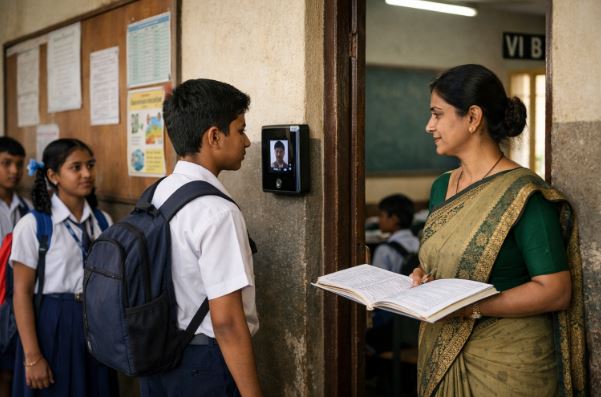
In today’s digital workplaces and educational institutions, organisations are steadily moving away from manual registers and fingerprint machines. A face recognition attendance system is emerging as a smart and contactless solution that ensures accurate attendance tracking with enhanced security.
With rapid digital transformation across India in 2026, businesses and schools are adopting AI powered attendance management systems to improve efficiency and eliminate time fraud.
Unlike traditional biometric devices that require physical contact, facial recognition technology captures and verifies an individual’s face through advanced algorithms.
This modern system not only records attendance in real time but also integrates with payroll, HRMS, and access control systems. Understanding how this system works helps organisations make informed decisions when upgrading their attendance management process.
What Is a Face Recognition Attendance System?

A face recognition attendance system is a biometric attendance system that identifies and verifies individuals using facial features. Instead of scanning fingerprints or swiping cards, the system captures an image of the face and matches it with stored data in a secure database.
Why It Is Gaining Popularity in India?
Organisations are replacing traditional systems because facial recognition offers contactless authentication and higher accuracy. Fingerprint devices often fail due to worn out fingerprints, hygiene concerns, or device damage. Facial recognition technology eliminates these issues and provides seamless attendance recording.
Key reasons for adoption include:
- Touchless attendance process
- Reduced maintenance compared to fingerprint devices
- Faster employee attendance tracking
- Improved workplace security
Corporate offices, schools, healthcare facilities, and manufacturing units are increasingly implementing this automated attendance system to streamline operations and ensure compliance.
How Does a Face Recognition Attendance System Work?
A face recognition attendance system works through a structured process powered by artificial intelligence and machine learning models.
Step 1: Facial Data Capture
A camera installed at entry points captures the image of the person. High resolution cameras ensure accurate facial data capture even in varied lighting conditions.
Step 2: Face Detection and Feature Extraction
The system uses image processing techniques to detect the face within the frame. It then extracts unique facial features such as eye distance, jaw structure, and facial contours.
Step 3: Biometric Authentication
AI algorithms convert facial features into digital data. This data is compared with stored records in the cloud based attendance software. If the match is successful, attendance is marked instantly.
Step 4: Real-Time Attendance Update
The attendance management system updates records in real time. Data can be accessed through dashboards, mobile apps, or integrated HR systems.
This automated process ensures accurate time and attendance management without manual intervention.
What Technologies Power an AI-Based Face Recognition Attendance System?
The efficiency of a facial recognition attendance system depends on advanced technologies working together.
Artificial Intelligence and Machine Learning
AI algorithms learn and improve recognition accuracy over time. Machine learning models analyse facial patterns and adapt to changes such as ageing or minor appearance variations.
Cloud-Based Attendance Management
Modern systems operate on secure cloud platforms. This allows organisations to store data safely and access attendance reports from any location.
Integration Capabilities
Most AI-based attendance systems integrate with
- HRMS platforms
- Payroll software
- Access control systems
These integrations reduce payroll errors and ensure accurate salary calculations based on real time attendance tracking.
How Does a Facial Recognition Attendance System Prevent Buddy Punching and Time Fraud?

Buddy punching occurs when one employee marks attendance for another. Traditional card based or PIN based systems are vulnerable to such misuse. A facial recognition attendance system eliminates this risk because each face is unique.
Secure Biometric Authentication
Since the system verifies live facial features, proxy attendance becomes nearly impossible. Real time image verification ensures that the actual person is present.
Enhanced Monitoring
The attendance management system maintains digital logs and time stamps. Administrators can review reports and analytics to detect irregularities.
Benefits include:
- Accurate time tracking
- Reduction in payroll manipulation
- Improved organisational transparency
This level of security enhances trust and accountability within the workplace.
Where Can Face Recognition Based Attendance Systems Be Implemented Effectively?
Face recognition based attendance systems are versatile and suitable for various sectors across India.
Educational Institutions
Schools and colleges use facial recognition for student attendance monitoring. It reduces classroom time spent on roll calls and ensures accurate attendance records.
Corporate Offices
Employee attendance tracking becomes seamless with automated systems. Managers can access attendance reports and performance data through dashboards.
Manufacturing and Healthcare
Shift based industries benefit from real-time tracking and secure access control integration.
Government organisations and public sector units are also adopting this technology to improve administrative efficiency and maintain accurate attendance records.
What Are the Key Features of a Modern Attendance Management System with Facial Recognition?
A modern attendance management system offers more than simple check in and check out functionality.
Real Time Analytics and Reports
Organisations receive detailed attendance reports and insights. These analytics support better workforce planning and productivity management.
Mobile and Remote Access
Mobile attendance apps allow administrators to monitor attendance from anywhere. Cloud connectivity ensures centralised control.
Data Security and Compliance
Secure data storage and encrypted databases protect sensitive employee information. Compliance features help organisations meet regulatory standards.
Important features include:
- Touchless biometric solution
- Seamless payroll integration
- Customisable attendance policies
These features make facial recognition systems a reliable solution for modern businesses.
What Are the Benefits of Using a Contactless Face Recognition Attendance System in India?

The benefits of implementing a contactless attendance system extend beyond convenience.
Improved Accuracy
AI driven systems minimise human error and eliminate manual entry mistakes.
Increased Productivity
Automated attendance saves administrative time. Employees can focus more on core tasks rather than attendance formalities.
Long Term Cost Efficiency
Although initial investment may be higher than traditional systems, reduced maintenance and improved payroll accuracy lead to long term savings.
Other advantages include:
- Enhanced workplace security
- Faster attendance processing
- Better compliance management
As digital adoption increases in India, more organisations recognise the value of face recognition attendance systems in improving operational efficiency.
Conclusion
A face recognition attendance system represents the next stage in biometric authentication and workforce management. By combining artificial intelligence, machine learning, and cloud based attendance software, this system delivers secure, accurate, and real time attendance tracking.
From preventing buddy punching to integrating with payroll and HRMS platforms, facial recognition technology offers a comprehensive solution for organisations across sectors.
Educational institutions, corporate offices, and manufacturing units in India are embracing this smart technology to enhance productivity and ensure compliance.
Frequently Asked Questions
Is facial recognition attendance suitable for small businesses?
Yes, small businesses can benefit from facial recognition systems because they reduce
Can the system recognise faces with glasses or minor appearance changes?
Modern AI based systems are trained to identify facial patterns even with glasses, facial hair, or slight changes in appearance, ensuring consistent accuracy.
Does facial recognition attendance require constant internet access?
Many systems work offline temporarily and sync data to the cloud once internet connectivity is restored, ensuring uninterrupted attendance tracking.
How secure is the stored facial data?
Reputable attendance management systems use encrypted cloud storage and secure servers to protect biometric data from unauthorised access.
How long does it take to implement a face recognition attendance system?
Implementation time depends on the size of the organisation, but most systems can be deployed within a few days with proper setup and employee enrolment.