
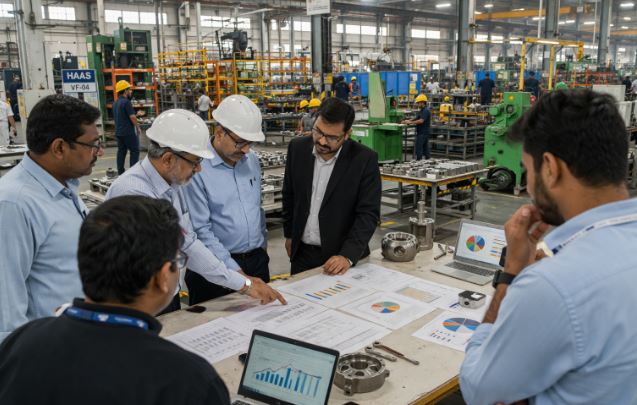
Selecting the right ERP solution is a critical decision for any growing manufacturing company. As operations scale, managing inventory, production, procurement, and finance through disconnected systems becomes inefficient and error-prone.
An ideal ERP system integrates all business processes into a single platform, enabling real-time visibility and better decision-making. However, with numerous options available, choosing the right fit requires careful evaluation of business needs, scalability, customization, and long-term value rather than just initial cost or popularity.
Selecting the Right ERP Solution
1. Streamlined Operations and Process Integration
An ideal ERP solution centralizes all core business processes, including procurement, production planning, inventory management, sales, and finance, into a unified system. This eliminates data silos and ensures seamless communication across departments.
For a growing manufacturing company, this integration reduces manual intervention, minimizes duplication of work, and improves workflow efficiency. Employees no longer need to switch between multiple tools or rely on spreadsheets, which often lead to inconsistencies.
Instead, real-time data flows across the organization, enabling faster decision-making and reducing operational bottlenecks. Over time, this leads to improved productivity, better coordination between teams, and a more structured approach to scaling operations without chaos.
2. Enhanced Inventory and Supply Chain Management
Manufacturing businesses heavily depend on accurate inventory tracking and efficient supply chain coordination. A well-chosen ERP system provides real-time visibility into stock levels, raw materials, finished goods, and supplier performance. This helps prevent overstocking, stockouts, and production delays.
Advanced ERP solutions also support demand forecasting and automated reordering, ensuring optimal inventory levels at all times. For growing companies, this translates into better working capital management and reduced wastage.
Additionally, improved supplier coordination and logistics tracking enhance overall supply chain reliability. With centralized data, businesses can make informed procurement decisions, negotiate better with vendors, and maintain smooth production cycles without unnecessary disruptions.
3. Improved Production Planning and Scheduling
Efficient production planning is essential for meeting customer demands while minimizing costs. An ERP system enables manufacturers to plan production schedules based on real-time data such as inventory availability, order demand, and machine capacity.
This reduces idle time, avoids overproduction, and ensures optimal utilization of resources. With features like bill of materials (BOM) management and shop floor tracking, companies gain better control over manufacturing processes.
As the business grows, ERP systems help handle increased complexity without compromising efficiency. Accurate scheduling also improves on-time delivery rates, enhances customer satisfaction, and reduces operational stress, allowing businesses to scale production in a controlled and predictable manner.
4. Data-Driven Decision Making
One of the most significant advantages of an ERP system is access to real-time, accurate data across all business functions. Decision-makers can generate reports and analytics related to sales performance, production efficiency, financial health, and inventory trends.
This eliminates guesswork and allows leaders to make informed strategic decisions. For a growing manufacturing company, data-driven insights are crucial for identifying inefficiencies, optimizing costs, and exploring growth opportunities.
Modern ERP systems also offer dashboards and predictive analytics, helping businesses anticipate challenges and respond proactively. Over time, this leads to smarter planning, reduced risks, and a stronger competitive position in the market.
5. Scalability and Flexibility for Growth
As manufacturing companies expand, their operational complexity increases significantly. A well-selected ERP solution is designed to scale alongside the business, accommodating new products, processes, users, and locations without major disruptions.
Cloud-based ERP systems, in particular, offer flexibility by allowing businesses to add modules or features as needed. This ensures that the system remains relevant even as requirements evolve.
Additionally, customizable workflows enable companies to adapt the ERP to their specific processes rather than changing their operations entirely. Investing in a scalable ERP solution prevents the need for frequent system replacements, saving time and costs while supporting long-term growth strategies effectively.
6. Improved Compliance and Quality Control
Manufacturing industries often need to adhere to strict regulatory standards and quality benchmarks. An ERP system helps maintain compliance by standardizing processes, tracking documentation, and ensuring proper audit trails.
Features like quality checks, batch tracking, and defect management allow businesses to maintain consistent product standards. For growing companies, this is especially important as increased production volumes can lead to quality inconsistencies if not managed properly.
ERP systems also simplify reporting for regulatory authorities, reducing the risk of penalties or legal issues. By maintaining high quality and compliance standards, companies can build stronger customer trust and enhance their brand reputation in competitive markets.
7. Cost Optimization and Financial Control
An ERP system provides comprehensive financial visibility, allowing businesses to track costs associated with production, labor, procurement, and overheads. This helps identify areas where expenses can be reduced without affecting output quality. Automated financial processes such as invoicing, budgeting, and expense tracking minimize errors and improve accuracy.
For a growing manufacturing company, controlling costs is crucial to maintaining profitability while scaling operations. ERP systems also provide real-time financial insights, enabling better cash flow management and strategic planning. Over time, this leads to improved financial discipline, optimized resource allocation, and stronger overall business performance.
Conclusion
Choosing the ideal ERP solution is not just a technology decision but a strategic investment that directly impacts a manufacturing company’s growth and efficiency. The right ERP system enhances visibility, streamlines operations, and supports scalability while ensuring compliance and cost control.
By carefully evaluating business needs and future goals, companies can select a solution that evolves with them. Ultimately, a well-implemented ERP system becomes the backbone of sustainable growth, enabling manufacturers to remain competitive in an increasingly dynamic market.
FAQs
What factors should be considered when selecting an ERP for manufacturing?
Key factors include scalability, industry-specific features, integration capabilities, ease of use, customization options, vendor support, and total cost of ownership.
Is cloud ERP better than on-premise ERP for manufacturing companies?
Cloud ERP is generally more flexible, scalable, and cost-effective, especially for growing companies, while on-premise may offer more control for highly regulated industries.
How long does ERP implementation typically take?
Implementation can range from 3 to 12 months depending on company size, complexity, and customization requirements.
Can ERP systems be customized for specific manufacturing needs?
Yes, most modern ERP solutions allow customization to align with specific workflows, production processes, and reporting requirements.
What are the common challenges in ERP implementation?
Common challenges include resistance to change, data migration issues, inadequate training, and unclear requirements during the planning phase.