
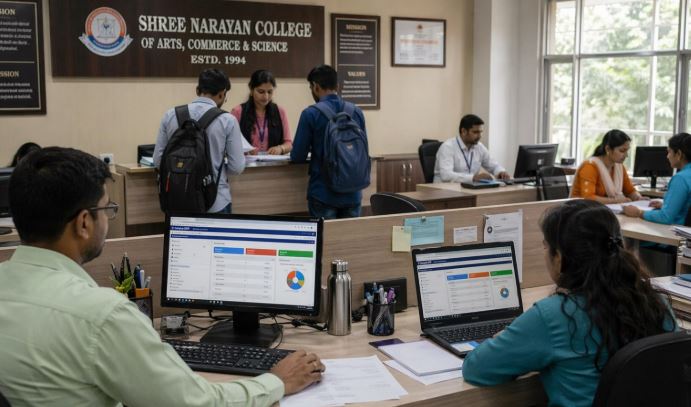
In 2026, colleges are experiencing a rapid shift towards digital ecosystems that demand efficiency, accuracy, and transparency. Managing academic and administrative tasks manually is no longer sustainable in a competitive education environment. Institutions across India are increasingly adopting cloud-based ERP systems to streamline operations and improve decision-making.
But why do colleges need cloud-based ERP systems today? The answer lies in their ability to centralise data, automate workflows, and enhance the overall educational experience for students, faculty, and administrators.
What Is a Cloud ERP System for Colleges and How Does It Work?
A cloud ERP system for colleges is an integrated software platform hosted on the cloud that manages academic and administrative processes in one place. Unlike traditional systems that require on-site infrastructure, cloud ERP operates through the internet, making it accessible anytime and anywhere.
This system connects multiple departments such as admissions, academics, finance, and human resources into a single platform. It ensures that data flows seamlessly across departments without duplication or delay.
Key Working Mechanism
- Centralised database stores all institutional data
- Users access the system through secure login credentials
- Real-time updates ensure data accuracy
- Automated workflows reduce manual intervention
Cloud computing plays a vital role by offering scalability and flexibility. Colleges can expand their usage as needed without investing heavily in hardware. This modern approach aligns with the growing need for digital transformation in education.
Why Are Colleges Rapidly Adopting Cloud ERP Solutions in 2026?
The adoption of cloud ERP systems in colleges has accelerated due to the increasing demand for digital infrastructure. Educational institutions are under pressure to modernise their operations and provide better services to students.
One of the key drivers is the push for digital transformation in India’s education sector. Policies and technological advancements have encouraged institutions to adopt smart solutions that improve efficiency and transparency.
Colleges are also recognising the importance of automation in reducing administrative workload. Tasks such as attendance tracking, fee collection, and timetable management can now be handled automatically.
Another major factor is accessibility. Cloud ERP systems allow stakeholders to access information from anywhere, which is especially useful in hybrid learning environments.
In addition, these systems help institutions stay competitive by improving operational efficiency and enhancing the overall student experience.
How Does a Cloud-based ERP System Improve College Administration?

Cloud-based ERP systems significantly improve college administration by automating routine tasks and reducing manual errors. Administrators can manage complex processes more efficiently through a single platform.
One of the most impactful features is the student information system. It stores and manages student data such as attendance, grades, and personal details in an organised manner. This eliminates the need for multiple records and reduces redundancy.
Administrative Benefits
- Streamlined admission processes
- Automated fee management and tracking
- Efficient timetable scheduling
- Accurate attendance monitoring
These systems also provide real-time insights that help administrators make informed decisions. Reports and analytics enable institutions to identify trends and improve performance.
By reducing paperwork and manual effort, colleges can focus more on academic excellence and student development.
Why Do Colleges Need Cloud-based ERP Systems in 2026?
Colleges need cloud-based ERP systems in 2026 to stay relevant in a technology-driven education landscape. These systems offer a comprehensive solution to manage institutional operations effectively.
One of the primary reasons is centralised data management. All information is stored in a single system, making it easy to access and manage. This improves coordination between departments and reduces data inconsistencies.
Real-time access to data is another significant advantage. Faculty and administrators can retrieve information instantly, which enhances decision-making and responsiveness.
Cloud ERP systems are also cost-effective. They eliminate the need for expensive hardware and maintenance, making them a practical choice for institutions of all sizes.
Key Reasons
- Improved communication among stakeholders
- Enhanced operational efficiency
- Scalable solutions for growing institutions
- Better compliance and data management
In a rapidly evolving education sector, these systems provide the tools needed to adapt and thrive.
How Does Cloud ERP Enhance Student Experience and Engagement?
Cloud ERP systems play a crucial role in improving student experience by offering easy access to academic and administrative information. Students can interact with the system through user-friendly portals.
These portals allow students to check attendance, view grades, and access study materials without relying on administrative staff. This level of transparency builds trust and accountability.
Mobile accessibility is another important feature. Students can use their smartphones to stay updated on schedules, announcements, and academic progress.
Cloud ERP also improves communication between students and faculty. Notifications and updates are shared instantly, ensuring that everyone stays informed.
By simplifying processes and providing instant access to information, these systems create a more engaging and efficient learning environment.
What Are the Key Features of a Modern College ERP System?

Modern college ERP systems come equipped with advanced features that cater to the needs of educational institutions. These features are designed to improve efficiency and enhance overall performance.
One of the most important features is a comprehensive dashboard that provides insights into various operations. Administrators can monitor activities and make data-driven decisions.
Essential Modules in College ERP
- Admissions management for handling student enrolment
- Examination systems for conducting and evaluating tests
- Finance modules for managing fees and expenses
- Human resource management for staff operations
Data security is also a critical component. Cloud ERP systems use advanced encryption techniques to protect sensitive information. Regular backups ensure that data is not lost.
Integration capabilities allow these systems to connect with other tools such as learning management systems and payment gateways, creating a seamless digital ecosystem.
How Secure and Scalable Are Cloud ERP Systems for Colleges?
Security and scalability are two of the most important aspects of cloud ERP systems. Colleges handle large volumes of sensitive data, making security a top priority.
Cloud ERP systems use advanced security measures such as encryption and secure access controls to protect data. Regular updates ensure that the system remains protected against emerging threats.
Scalability allows institutions to expand their operations without facing technical limitations. As the number of students grows, the system can accommodate increased data and user activity.
Disaster recovery is another key feature. Cloud systems maintain backups that can be restored in case of data loss or system failure.
These capabilities make cloud ERP systems a reliable and future-ready solution for educational institutions.
What Challenges Do Colleges Face Without a Cloud-based ERP System?
Colleges that do not adopt cloud-based ERP systems often struggle with inefficiencies and operational challenges. Manual processes can lead to errors and delays that affect overall performance.
One of the major issues is data fragmentation. Information stored in different systems creates inconsistencies and makes it difficult to access accurate data.
Lack of automation also increases workload for administrative staff. Tasks that could be completed in minutes take hours when done manually.
Poor decision-making is another challenge. Without real-time data, administrators cannot make informed choices that benefit the institution.
These challenges highlight the importance of adopting cloud ERP systems to improve efficiency and ensure smooth operations.
Conclusion
Cloud-based ERP systems have become an essential tool for colleges in 2026. They simplify complex processes, improve data management, and enhance the overall educational experience.
By adopting these systems, institutions can achieve greater efficiency, transparency, and scalability. As the education sector continues to evolve, cloud ERP solutions will play a crucial role in shaping the future of college management and ensuring long-term success.
FAQs
What makes cloud ERP better than traditional ERP for colleges?
Cloud ERP systems provide remote access, automatic updates, and reduced infrastructure costs, making them more flexible and efficient compared to traditional systems.
Is cloud-based ERP affordable for small colleges in India?
Cloud ERP solutions are generally affordable because they operate on subscription models, allowing smaller institutions to scale their usage as needed.
How long does it take to implement a college ERP system?
The implementation time depends on the institution’s size and requirements, but most systems can be deployed within a few weeks to a few months.
Can cloud ERP systems integrate with existing college software?
Yes, most modern cloud ERP systems are designed to integrate easily with existing tools such as learning management systems and payment platforms.
What kind of support is available for ERP systems in colleges?
ERP providers typically offer technical support, training, and regular updates to ensure smooth operation and user satisfaction.