
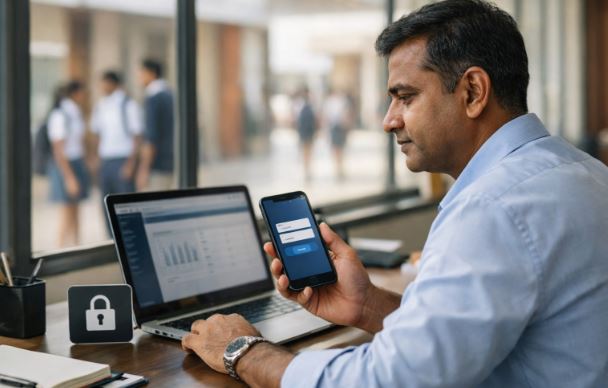
In today’s digital-first education landscape, schools are increasingly shifting from traditional, paper-heavy administration to smart, connected systems. Among the most transformative tools is cloud based school ERP software with mobile app functionality.
From managing admissions and attendance to facilitating communication between teachers and parents, this technology has become central to modern school operations.
However, as institutions store sensitive student data online and enable access through mobile devices, a critical question arises: Is cloud-based school ERP software with a mobile app secure?
Let’s explore this in detail.
What Makes Cloud-Based School ERP Software Different from Traditional Systems?
Traditional school management systems were often installed on local servers within the school premises. While this setup gave schools direct control, it also came with limitations such as high maintenance costs, hardware dependency, and vulnerability to physical damage.
On the other hand, cloud based school ERP software with mobile app operates on secure remote servers managed by professional cloud service providers. This offers:
- Remote access from anywhere
- Automatic updates
- Real-time data synchronization
- Reduced infrastructure costs
- Scalability as the school grows
The mobile app component further enhances accessibility, allowing parents, teachers, and administrators to stay connected anytime, anywhere. But does convenience compromise security? Not necessarily.
How Is Data Protected in Cloud-Based School ERP Software?
Security is a top priority in modern cloud systems. A reputable cloud based school ERP software with mobile app includes multiple layers of protection:
1. Data Encryption
Data is encrypted both in transit and at rest. This means that whether information is being uploaded, downloaded, or stored, it remains unreadable to unauthorized users.
2. Secure Data Centers
Cloud providers use highly secure data centers with 24/7 surveillance, biometric access controls, and fire protection systems.
3. Regular Backups
Automated backups ensure that data can be recovered in case of accidental deletion, cyberattacks, or system failure.
4. Firewall and Intrusion Detection
Advanced firewalls and intrusion detection systems monitor suspicious activities and prevent breaches before they escalate.
When implemented properly, cloud-based systems can often be more secure than on-premise systems, which may lack regular updates and monitoring.
Can Unauthorized Users Access Sensitive School Information?
One of the biggest fears schools have is unauthorized access to student records, financial data, or staff information.
A secure cloud based school ERP software with mobile app addresses this through:
Role-Based Access Control (RBAC)
Different users (admin, teacher, parent, student) have access only to the data relevant to their role.
Multi-Factor Authentication (MFA)
Users may be required to verify their identity through additional steps like OTPs sent to registered mobile numbers.
Strong Password Policies
Systems enforce complex passwords and periodic changes to reduce vulnerability.
Audit Trails
Every activity within the system is logged. This means administrators can track who accessed what and when.
With these controls in place, unauthorized access becomes significantly more difficult.
Is Mobile App Access a Security Risk?
Mobile apps often raise concerns because smartphones can be lost, stolen, or compromised.
However, modern cloud based school ERP software with mobile app solutions are built with mobile security in mind:
- Secure login authentication
- Auto logout after inactivity
- Encrypted API connections
- Device binding options
- Remote session termination
Even if a device is lost, data remains protected as it is not stored locally in readable form. Access can be revoked immediately from the admin panel.
In fact, mobile apps can improve security by reducing reliance on paper records and unsecured email communications.
How Do Cloud Providers Ensure Compliance with Data Privacy Regulations?
Schools handle highly sensitive information such as student records, medical details, and financial transactions. Compliance with data protection laws is crucial.
Reliable cloud based school ERP software with mobile app providers adhere to:
- GDPR-like data protection standards
- Secure hosting certifications
- Data processing agreements
- Regular third-party security audits
Schools should always verify whether the vendor complies with relevant local and international regulations before implementation.
What Happens During a Cyberattack or System Failure?
No system is 100% immune to threats. However, preparedness makes the difference.
A robust cloud based school ERP software with mobile app includes:
- Disaster recovery planning
- Data redundancy across multiple servers
- Real-time threat monitoring
- Immediate patch updates
Unlike local servers that may take days to restore, cloud systems can often recover quickly due to distributed infrastructure.
Are On-Premise Systems More Secure Than Cloud Solutions?
It’s a common myth that keeping data “in-house” is automatically safer.
In reality:
- On-premise systems rely on local IT expertise.
- Updates may be delayed.
- Backup procedures may not be consistently followed.
- Physical damage (fire, flood, theft) can destroy data.
By contrast, a well-managed cloud based school ERP software with mobile app benefits from dedicated security teams, advanced infrastructure, and regular updates.
Security ultimately depends more on implementation quality than on whether the system is cloud-based or local.
How Can Schools Strengthen Security Even Further?
Even the most secure system requires responsible usage. Schools can enhance protection by:
- Training staff on cybersecurity awareness
- Avoiding password sharing
- Enabling multi-factor authentication
- Conducting periodic security audits
- Choosing reputable vendors with proven track records
Technology alone is not enough; user behavior plays a crucial role in maintaining data safety.
Does Cloud Security Improve Communication Safety?
One overlooked benefit of cloud based school ERP software with mobile app is secure communication.
Instead of sharing sensitive information over unsecured messaging apps or emails, schools can:
- Send encrypted notifications
- Share report cards securely
- Handle fee payments through protected gateways
- Maintain centralized communication logs
This reduces the risk of data leaks and misinformation.
Conclusion
So, is cloud-based school ERP software with a mobile app secure?
The answer is yes, provided it is implemented correctly and managed responsibly.
Modern cloud based school ERP software with mobile app solutions are built with advanced security measures such as encryption, role-based access control, secure data centers, and compliance standards. In many cases, they offer stronger protection than traditional on-premise systems.
While no system is completely risk-free, cloud technology combined with responsible user practices provides a highly secure and scalable solution for educational institutions.
For schools aiming to modernize operations without compromising safety, cloud-based ERP systems with mobile access represent a smart and secure choice.
Frequently Asked Questions
Is cloud based school ERP software with mobile app safe for storing student data?
Yes, reputable systems use encryption, secure servers, and access controls to protect sensitive student information.
Can parents securely access information through the mobile app?
Yes, access is role-based and often protected by strong authentication methods such as OTP verification.
What happens if a mobile phone with ERP access is lost?
Administrators can revoke access immediately, and data remains secure since it is not stored in readable format on the device.
How often are security updates applied in cloud systems?
Cloud providers typically apply security patches and updates automatically and regularly.
Is cloud ERP more secure than traditional school management software?
In many cases, yes. Cloud systems benefit from professional security management, automated backups, and continuous monitoring.