
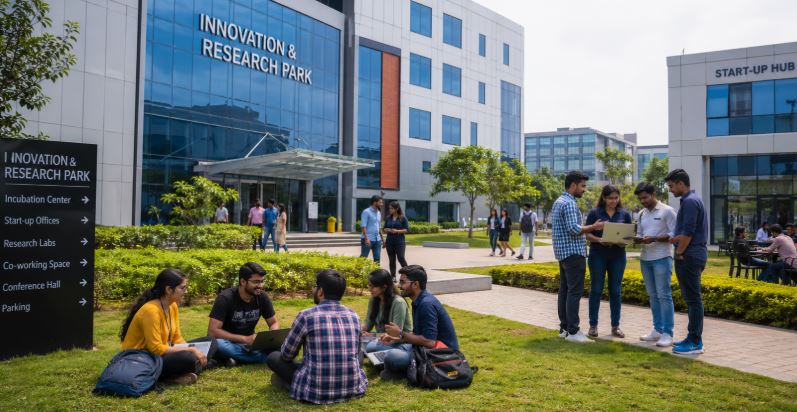
Can universities truly bridge the gap between academic learning and real world innovation? Why are science parks becoming essential for modern higher education institutions in India? The benefits of science park for universities are increasingly visible as institutions aim to enhance research, industry collaboration, and student outcomes.
Science parks create a dynamic environment where innovation meets application, helping universities evolve into global knowledge hubs while supporting economic and technological growth in a competitive landscape.
Why Do Universities Need Science Parks Today?
Universities today are no longer limited to classroom teaching and theoretical research. They are expected to contribute directly to innovation, industry growth, and national development. Science parks play a crucial role in fulfilling these expectations by creating an ecosystem where education, research, and business intersect effectively.
A science park acts as a bridge between academia and industry. It enables universities to collaborate with companies, startups, and research organisations in a structured and productive way. This collaboration enhances the quality of research and ensures that academic work has practical relevance. In India, where the focus on innovation and entrepreneurship is growing rapidly, science parks have become highly significant.
Science parks also support the commercialisation of research. Many university projects remain unused due to lack of industry connection. With a science park, these ideas can be developed into real products and services. This improves the university’s reputation and opens up funding opportunities.
Another important aspect is student exposure. Students gain access to real world projects, internships, and mentorship. This helps them build skills that are aligned with industry needs. As a result, universities that invest in science parks are better positioned to produce job ready graduates.
How Do Science Parks Support Innovation in Universities?
Innovation is at the core of every successful university today, and science parks significantly enhance this capability. They provide the infrastructure, resources, and collaborative environment required for innovative ideas to flourish.
Science parks offer advanced research facilities and incubation centres where students, researchers, and startups can work together. These facilities are often equipped with modern technologies that may not be available within traditional university departments. This access enables high quality research and experimentation.
They also encourage interdisciplinary collaboration. Innovation often happens when different fields come together. Science parks bring experts from engineering, management, healthcare, and other domains into one ecosystem. This leads to the development of creative and impactful solutions.
Another key contribution is funding support. Many science parks are connected with investors, government grants, and private funding agencies. This makes it easier for universities to secure financial support for research and innovation projects.
Key ways science parks support innovation include:
- Providing incubation support for startups
- Facilitating industry partnerships
- Offering access to advanced research tools
- Enabling faster idea to market processes
By strengthening innovation capabilities, science parks help universities remain competitive and relevant in a rapidly changing global environment.
Top 5 Benefits of Science Park for Universities
1. Strong Industry Academia Collaboration
One of the major benefits of science park for universities is the ability to establish strong connections with industries. These partnerships allow universities to work closely with companies on research projects, product development, and problem solving.
Industry collaboration ensures that academic research is aligned with market needs. It also provides universities with insights into current industry trends, which can be incorporated into the curriculum. This leads to better learning outcomes and improved employability for students.
Companies benefit as well by gaining access to fresh talent and innovative ideas. This mutually beneficial relationship strengthens both the university and the industry.
2. Enhanced Research and Development Opportunities
Science parks significantly improve research capabilities within universities. They provide dedicated spaces and resources for conducting advanced research across various disciplines.
Researchers can work on real world problems and collaborate with industry experts. This leads to more impactful and practical research outcomes. Universities also gain recognition for their contributions to innovation and technology development.
In addition, science parks help in securing research funding. With strong industry connections and visible outcomes, universities are more likely to attract investments and grants.
3. Promotion of Entrepreneurship and Startups
Science parks encourage entrepreneurial thinking among students and faculty. They provide incubation centres, mentorship, and financial support for startups.
Students with innovative ideas can transform them into successful businesses with the help of science park resources. This not only boosts confidence but also creates job opportunities.
Entrepreneurship development also enhances the reputation of universities as innovation driven institutions. Many successful startups emerging from science parks contribute to economic growth and technological advancement.
4. Improved Student Learning and Skill Development
Science parks create opportunities for experiential learning. Students get the chance to work on live projects, internships, and research assignments within the park.
This exposure helps students develop practical skills such as problem solving, teamwork, and communication. These skills are highly valued by employers and improve job readiness.
Students also interact with industry professionals and entrepreneurs, gaining valuable insights into real world challenges. This enhances their overall learning experience.
5. Contribution to Economic and Regional Development
Science parks play a significant role in regional and national development. They attract investments, create employment opportunities, and promote innovation driven growth.
Universities with science parks become key contributors to the local economy. They support the growth of startups and small businesses, which in turn generate revenue and employment.
The presence of a science park also enhances the university’s brand value. It positions the institution as a leader in innovation and research, attracting students, faculty, and partners from across the country.
What Are the Key Features of a University Science Park?
To understand the benefits of science park for universities, it is important to look at their core features. These elements make science parks effective and impactful.
| Feature | Description |
| Incubation Centres | Support startups with infrastructure and mentorship |
| Research Facilities | Provide advanced tools for innovation |
| Industry Partnerships | Enable collaboration with companies |
| Funding Access | Connect with investors and grant providers |
| Skill Development Programs | Enhance student capabilities |
These features collectively create a strong innovation ecosystem within the university.
Conclusion
The benefits of science park for universities clearly highlight their importance in modern education systems. From fostering innovation to enhancing student skills and promoting entrepreneurship, science parks transform universities into dynamic hubs of growth. They strengthen industry connections and contribute to economic development.
As India continues to focus on innovation driven progress, universities with science parks will play a crucial role in shaping future leaders, researchers, and entrepreneurs in an increasingly competitive global environment.
FAQs
What is the main purpose of a science park in universities?
The main purpose of a science park is to create a platform where universities, industries, and researchers can collaborate to promote innovation, research, and entrepreneurship.
How do science parks help students in universities?
Science parks help students by providing practical exposure, internships, and opportunities to work on real world projects, improving their skills and employability.
Are science parks beneficial for research activities?
Yes, science parks provide advanced facilities, funding opportunities, and industry collaboration, which significantly enhance research quality and output.
Do science parks support startups in universities?
Science parks offer incubation support, mentorship, and access to funding, helping students and researchers turn ideas into successful startups.
Why are science parks important for India?
Science parks are important for India as they promote innovation, support economic growth, and help universities contribute to national development.