
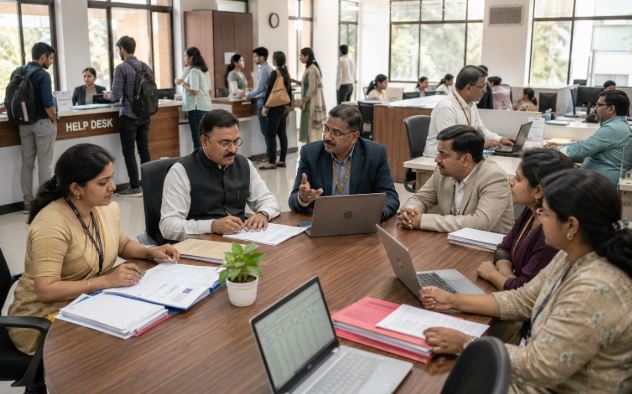
Managing a college manually in 2026 has become difficult due to increasing student admissions, academic activities, fee transactions, communication gaps, and documentation work. Many educational institutions in India are now adopting education automation software to simplify daily administrative operations and improve institutional productivity.
A smart automation strategy helps colleges reduce paperwork, improve student experience, and save valuable time for administrators and faculty members.
Benefits of College Administration Automation
- Faster admission and enrollment processing
- Improved student data management
- Automated attendance and fee tracking
- Better communication between departments
- Reduced manual errors and paperwork
- Centralized campus management system
- Improved institutional productivity and transparency
Modern colleges are now focusing on digital transformation to stay competitive and deliver efficient educational services. With the right implementation plan, institutions can automate major administrative operations within just 30 days.
Why Are Colleges Rapidly Moving Towards Administration Automation?
Educational institutions are rapidly adopting automation because traditional administrative systems consume too much time and resources. Manual processes often create delays in admissions, fee collection, attendance tracking, examination management, and student communication. Colleges handling thousands of students face operational inefficiencies when records are managed physically.
Automation software simplifies these repetitive tasks through centralized digital platforms. Education ERP systems help administrators manage academic and non academic activities from a single dashboard. This improves coordination between departments and minimizes operational confusion.
What Problems Do Traditional Administrative Processes Create?

Traditional college administration often results in:
- Delayed student admissions
- Manual attendance errors
- Inefficient timetable scheduling
- Increased paperwork
- Lack of real time student information
- Slow communication between faculty and administration
These challenges affect both students and management teams. Delays in administrative activities can negatively impact institutional reputation and student satisfaction.
How Does Education Automation Improve Institutional Efficiency?
Automation reduces repetitive manual work and allows staff to focus on academic growth and student engagement. Colleges can access real time data, generate reports instantly, and streamline workflows. Automated systems also improve transparency in fee management, attendance, examination records, and communication processes.
Digital transformation is no longer optional for higher education institutions in India. It has become essential for sustainable institutional growth.
How to Automate College Administration in 30 Days?
A successful automation process begins with proper planning and prioritization. Colleges do not need to automate every process at once. Instead, institutions can implement automation in phases over a 30 day period.
What Should Colleges Assess Before Starting Automation?
Before implementing automation, colleges should evaluate their existing administrative challenges. Institutions should identify areas where manual work consumes maximum time and resources.
Important areas to assess include:
- Student admissions
- Fee management
- Attendance tracking
- Examination processes
- Faculty management
- Communication systems
Understanding these operational gaps helps colleges choose the right education management software.
Which Administrative Tasks Should Be Prioritised First?
The first stage of automation should focus on high impact processes. Student enrollment automation, attendance management, and online fee collection are usually the most beneficial starting points.
A practical 30 day implementation timeline may include:
| Week | Automation Focus |
| Week 1 | Administrative assessment and software selection |
| Week 2 | Student admission and enrollment automation |
| Week 3 | Attendance and fee management integration |
| Week 4 | Staff training and full implementation |
This phased approach helps institutions adapt smoothly without disrupting daily operations.
Which College Operations Can Be Easily Automated?
Many college operations can now be digitized using cloud based education software. Automation improves speed, accuracy, and accessibility across departments.
How Can Student Enrollment Automation Reduce Workload?
Admission season creates heavy administrative pressure for colleges. Manual enrollment processes often involve document verification, form collection, payment tracking, and communication delays.
Automated enrollment systems simplify the process by allowing students to:
- Submit applications online
- Upload digital documents
- Track application status
- Receive instant notifications
- Complete fee payments digitally
This significantly reduces administrative workload and improves the admission experience for students and parents.
Why Is Automated Attendance and Fee Management Important?

Attendance tracking becomes easier with digital systems integrated with biometric devices or mobile applications. Faculty members can update attendance instantly, while students and parents receive real time notifications.
Similarly, automated fee management systems improve financial transparency. Colleges can generate invoices, monitor pending payments, and provide online payment options.
How Does Faculty and Timetable Management Become Simpler?
Education ERP software allows institutions to create automated timetables based on faculty availability and classroom schedules. This minimizes scheduling conflicts and improves academic planning.
Faculty records, payroll details, leave management, and workload distribution can also be managed efficiently through centralized software systems.
What Role Does Education ERP Software Play in Campus Automation?
Education ERP software acts as the foundation of digital campus management. It integrates all departments into a single centralized platform, allowing institutions to manage operations efficiently.
How Does a Centralised College Management System Work?
A centralized management system stores student, faculty, and administrative data in one secure platform. Authorized users can access information in real time, improving coordination across departments.
The system typically includes modules for:
- Admissions
- Attendance
- Examination management
- Fee collection
- Library management
- Communication systems
- Student performance tracking
This centralised approach reduces duplication of work and improves institutional productivity.
Why Are Cloud-Based Education Solutions Becoming Popular in India?
Cloud-based software offers flexibility and remote accessibility. Administrators, faculty members, and students can access information from anywhere using internet-enabled devices.
Indian educational institutions are increasingly choosing cloud-based solutions because they:
- Reduce infrastructure costs
- Improve data accessibility
- Enable real-time updates
- Provide secure data storage
- Support scalability for institutional growth
These solutions also support paperless campus administration, which aligns with modern sustainability goals.
How Can Colleges Successfully Implement Automation Within 30 Days?
Successful implementation depends on planning, training, and proper software adoption. Institutions should involve administrative staff and faculty members throughout the automation process.
What Is the Step-by-Step Automation Roadmap for Institutions?
The implementation process should follow structured stages:
- Identify operational challenges
- Select suitable education ERP software
- Digitize student and faculty records
- Automate admissions and fee systems
- Train administrative staff
- Monitor system performance regularly
Gradual implementation helps colleges avoid confusion and ensures smooth adaptation.
How Can Staff Training Improve Digital Transformation Success?
Technology adoption becomes successful only when staff members understand how to use the system effectively. Colleges should organize workshops and training sessions to help employees become comfortable with automation tools.
Proper training improves confidence, reduces resistance to change, and increases operational efficiency.
Institutions should also provide technical support during the initial stages of implementation.
What Challenges Do Colleges Face During Automation Implementation?
Although automation offers several benefits, institutions may face certain challenges during implementation.
How Can Institutions Overcome Resistance to Technology?
Many staff members may hesitate to adopt new systems due to a lack of technical knowledge or fear of change. Colleges can address this issue through proper communication and training.
Management teams should explain the long-term benefits of automation and involve employees in the implementation process.
Why Is College Administration Automation the Future of Higher Education?
Automation is transforming the future of higher education by improving operational efficiency, student engagement, and institutional performance. Colleges adopting smart campus solutions are better prepared to handle growing academic and administrative demands.
How Does Automation Enhance Student Experience and Productivity?
Students now expect faster communication, digital accessibility, and simplified academic processes. Automated systems help institutions provide seamless experiences through online portals, instant notifications, and real time academic updates.
This improves student satisfaction and strengthens institutional reputation.
Why Should Indian Educational Institutions Invest in Smart Campus Solutions?
Indian colleges are increasingly competing to provide modern educational experiences. Institutions investing in automation gain advantages such as:
- Improved operational efficiency
- Better student retention
- Faster decision-making
- Enhanced academic management
- Reduced administrative costs
As technology continues to evolve in 2026, automation will become a standard requirement for educational institutions seeking long-term growth and sustainability.
Conclusion
College administration automation is no longer a future concept. It has become a practical necessity for educational institutions aiming to improve efficiency, reduce manual workload, and enhance student experiences.
By implementing education ERP software and digital management systems, colleges can streamline admissions, attendance, fee collection, communication, and academic operations within a short period.
A structured 30 day implementation plan allows institutions to gradually adopt automation without disrupting daily activities. Colleges that embrace digital transformation today will be better prepared for the future of higher education in India.
Smart campus management not only improves productivity but also helps institutions build a modern, student-friendly learning environment.
FAQs
What is the best software for automating college administration in India?
The best software depends on the institution’s size and operational needs. Most Indian colleges prefer cloud based education ERP software that includes admissions, attendance, fee management, examination systems, and communication tools in one platform.
How much time does it take to digitise college administrative processes?
Basic college automation can be implemented within 30 days if institutions follow a phased strategy and prioritize major administrative tasks first.
Can small colleges afford education automation software?
Yes. Many software providers now offer scalable and affordable solutions designed specifically for small and medium educational institutions in India.
Is cloud-based college management software secure for student records?
Modern cloud-based systems use encryption, secure storage, and access control features to protect student and institutional data from unauthorized access.
How does automation help improve communication between colleges and students?
Automation platforms provide instant notifications, online portals, email alerts, and mobile access that help students receive real-time academic and administrative updates quickly.